
Patios and walkways in flagstone and pavers, retaining walls, limestone chop block borders, stone steps, outdoor kitchens and bars, fire pits, pool decks, mailbox columns and brick structures and sheds — across San Antonio.
Tell us about the space and we will come and measure it.
We will get back to you to talk the job through.
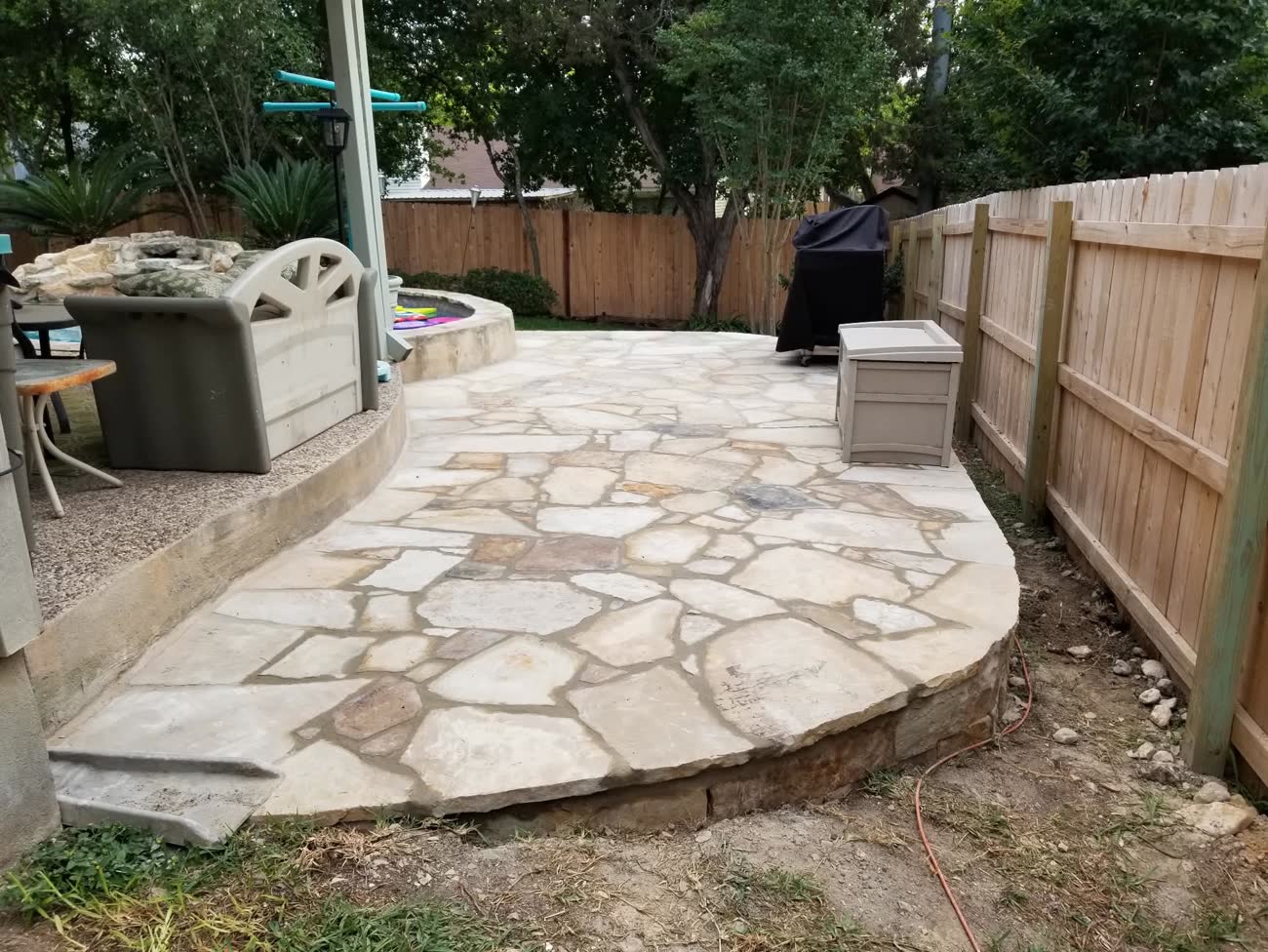
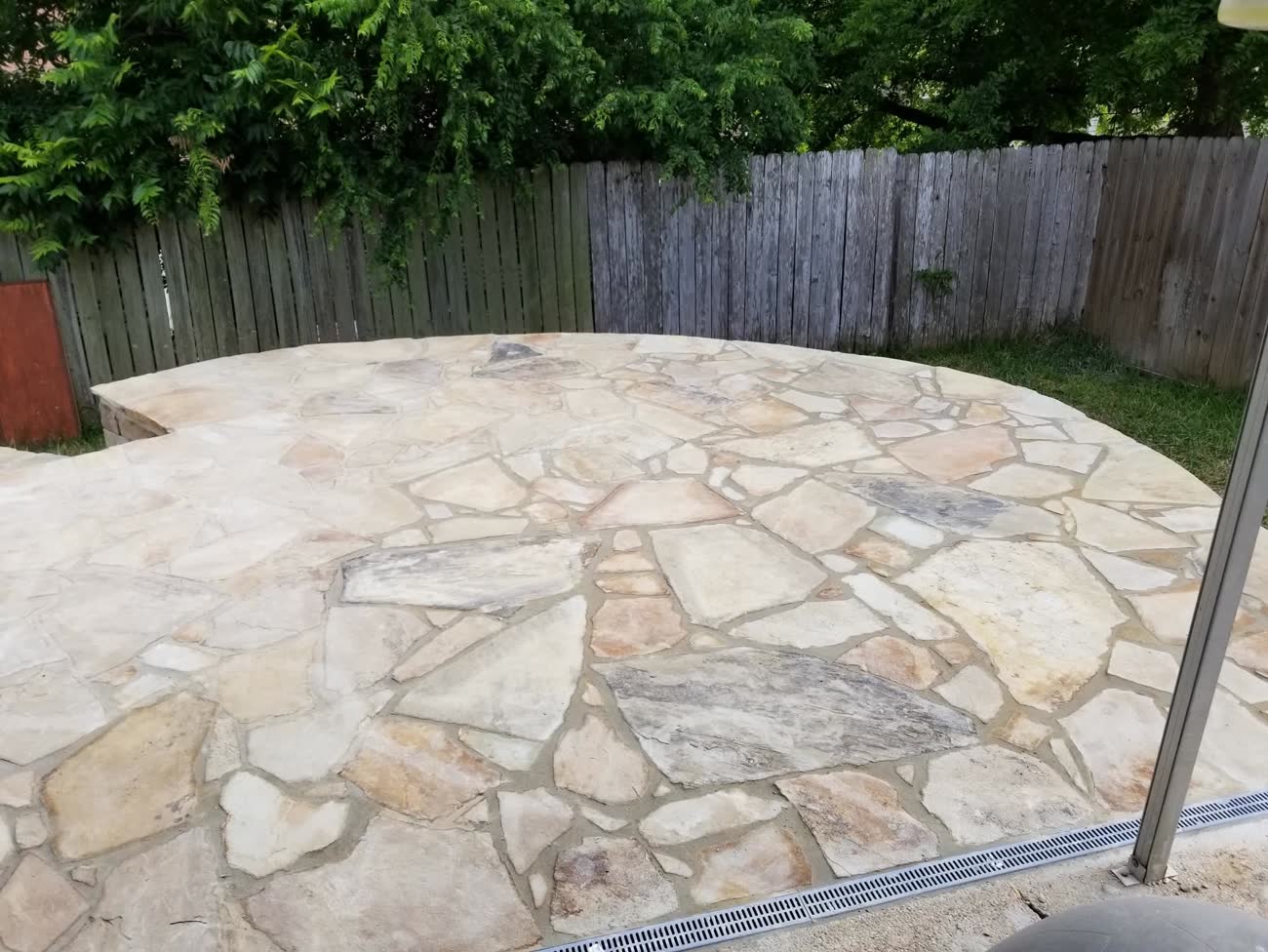
Irregular stone cut piece by piece so the joints stay tight, set on a prepared base and mortared. Patios, paths and landings.
This is the work they are asked for most, and it is the hardest to fake. Every piece has to be shaped to the one beside it rather than dropped into a pattern, which is why the cutting is most of the job.
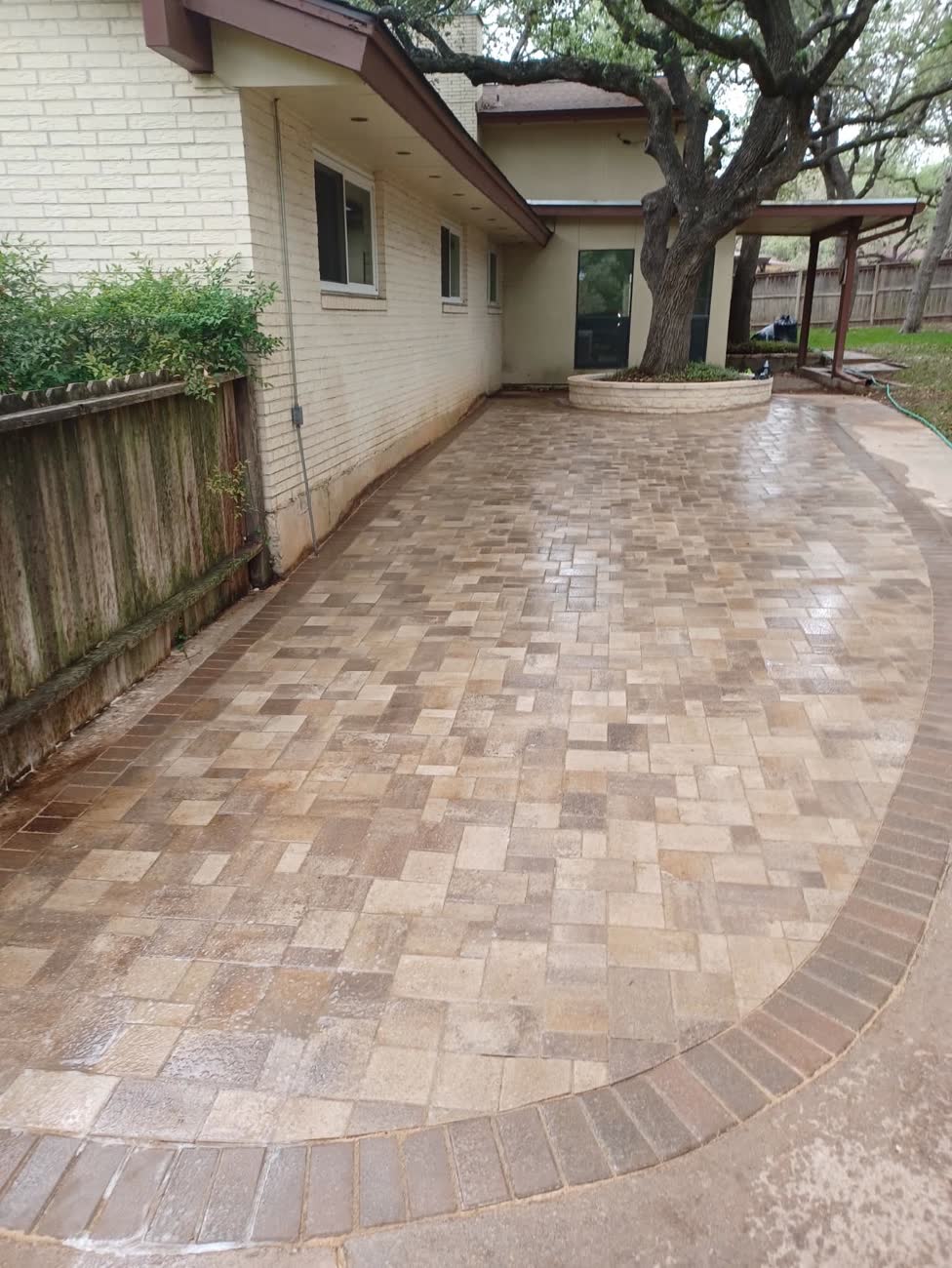
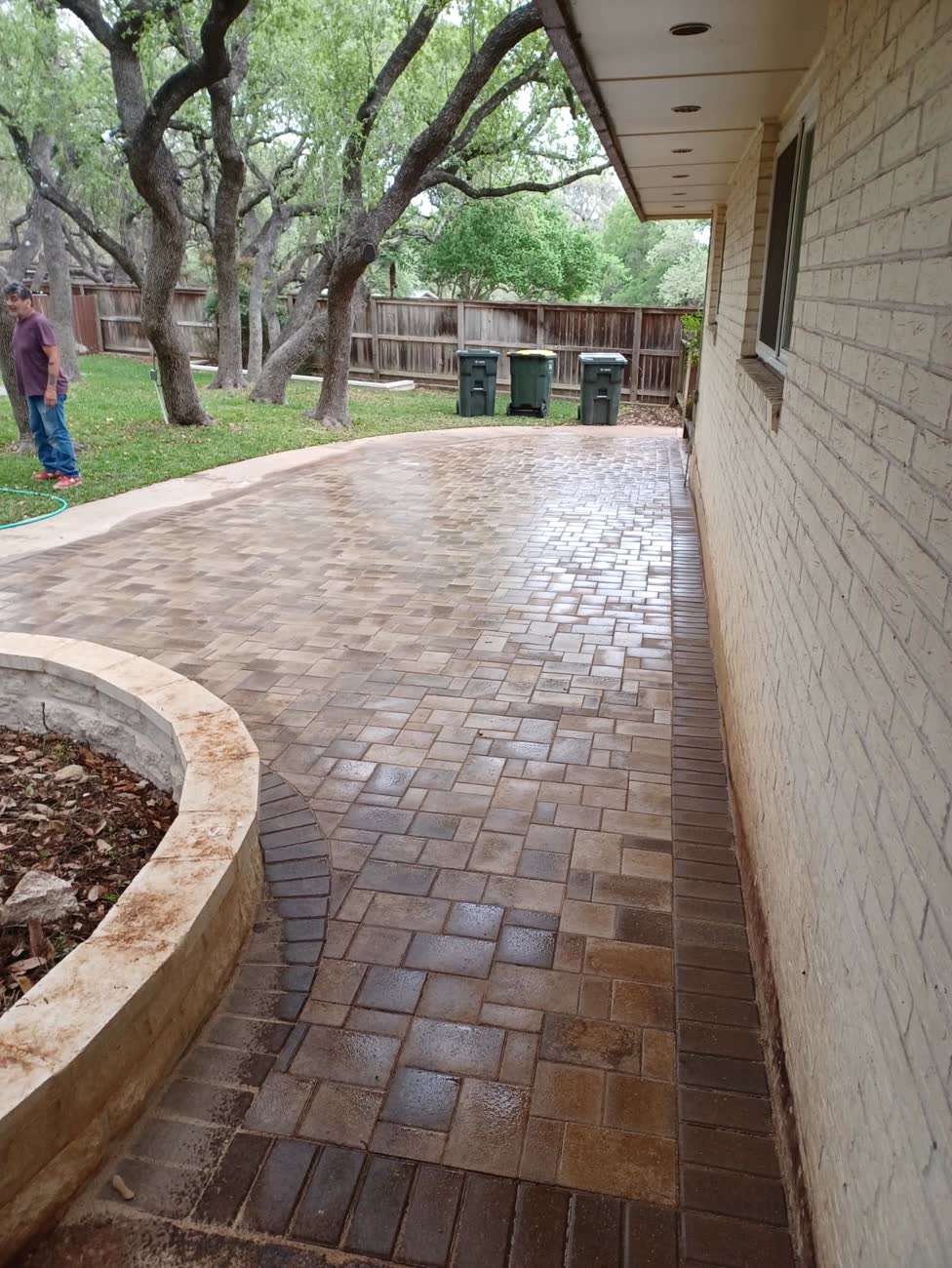
Pavers on a compacted base with a cut border holding the edge, so the field does not creep and spread over a few seasons.
The border is the part that decides it. A cut soldier course locks the outside edge, and that is the thing missing from a paver run that has gone wavy after a couple of summers.
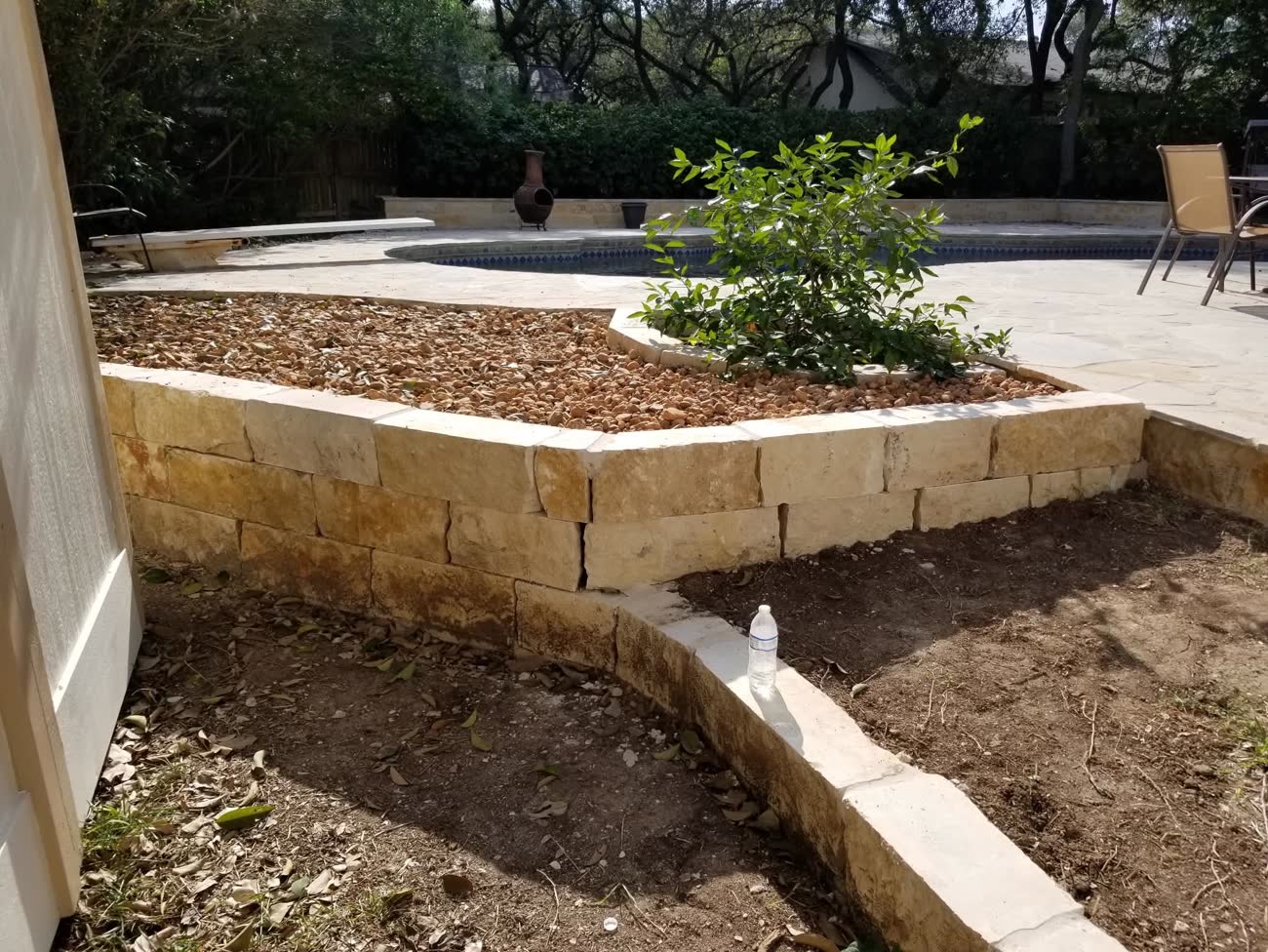
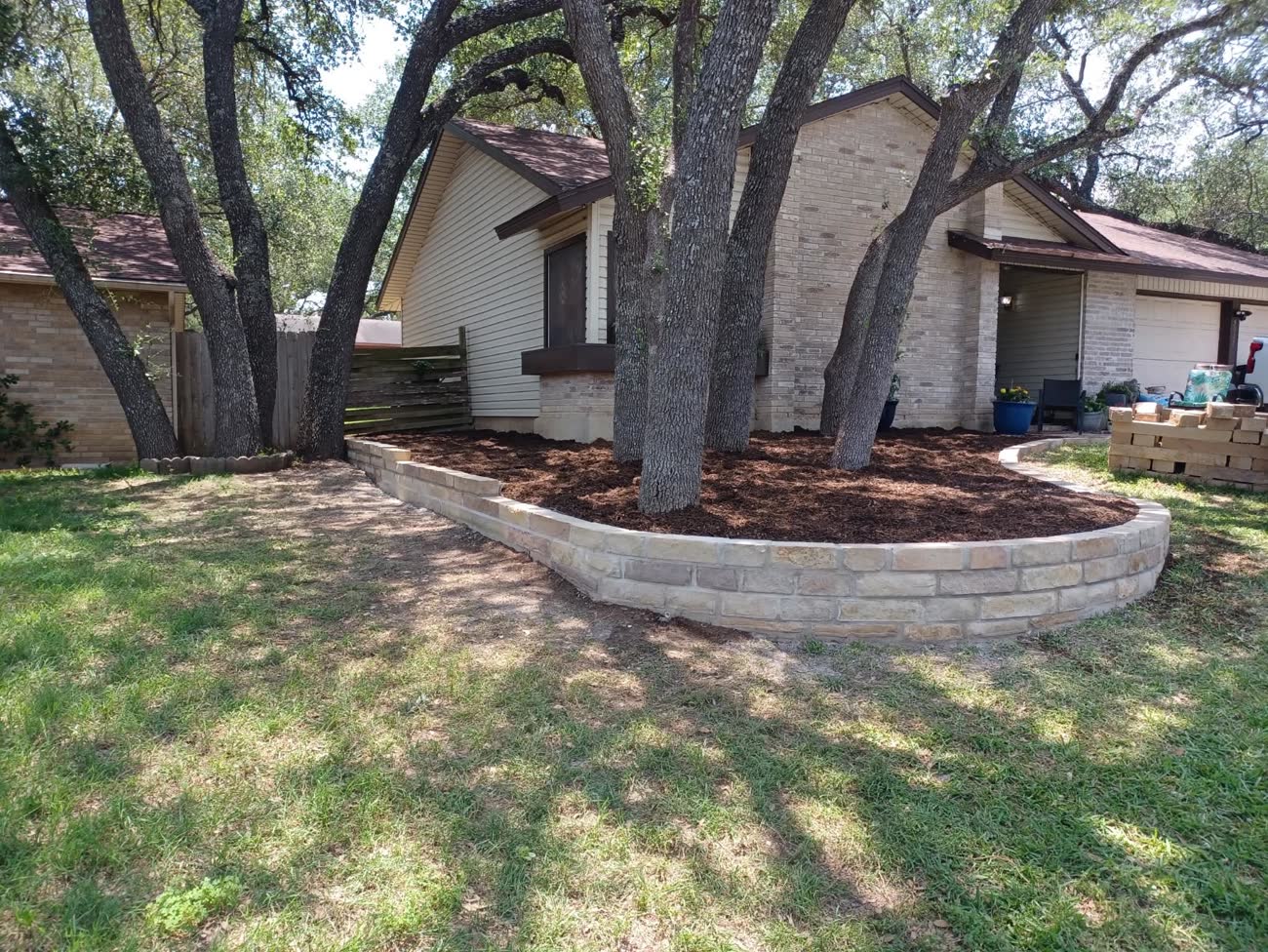
Chopped limestone laid to a line and backfilled to drain. Holds a bank, levels a slope, or turns a dead corner into a raised bed.
Based and drained so it holds the bank instead of leaning into the yard, with steps built into the run where the grade asks for them.
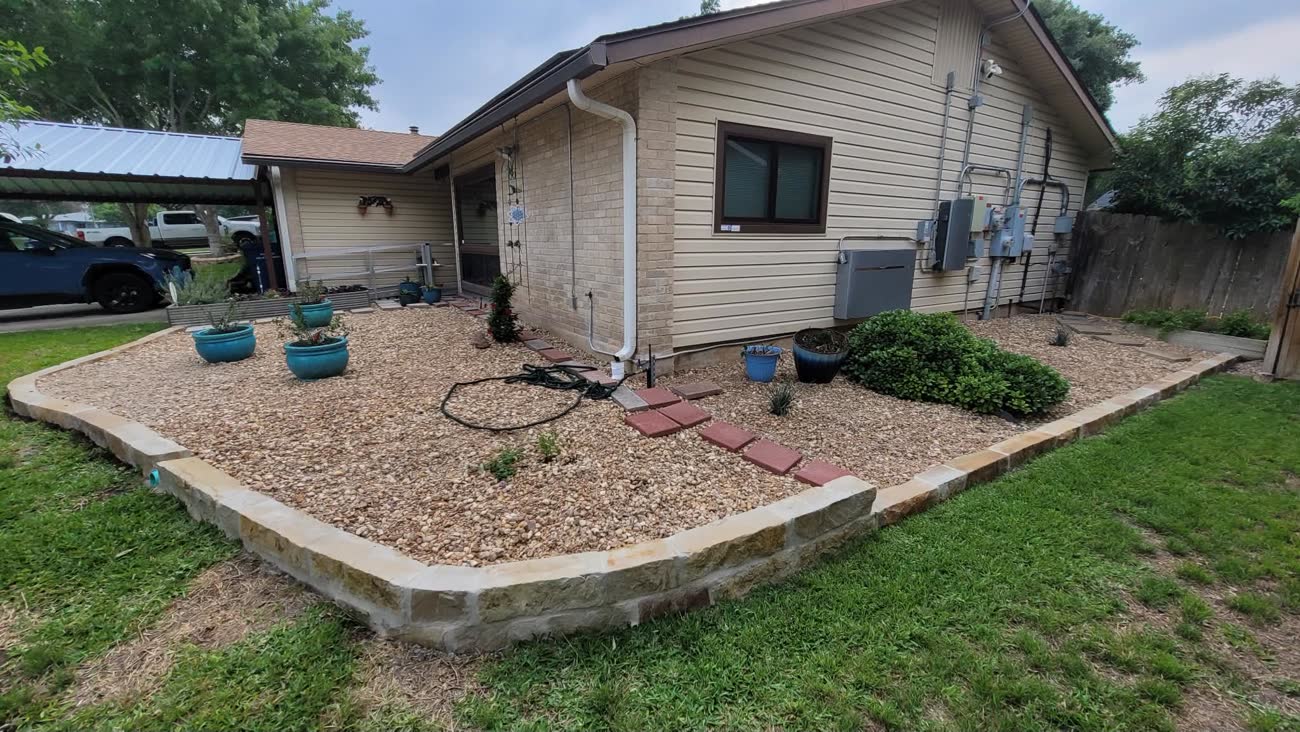
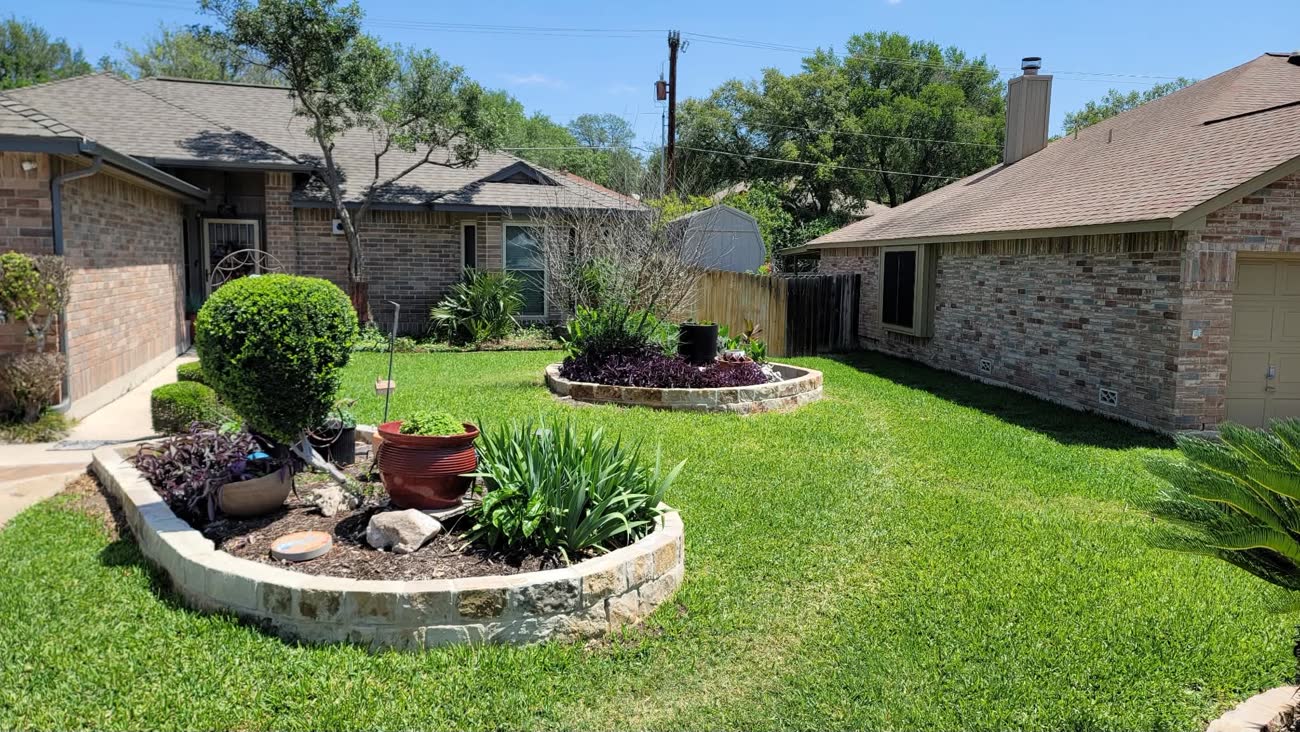
Chopped limestone set as a border around beds and along lawn edges. Heavy enough to stay where it is put, and it does not rot, bend or need replacing like steel or timber.
One of the three things they are asked for most. It sets a bed line for good — once the stone is down there is nothing to maintain and nothing to swap out later.
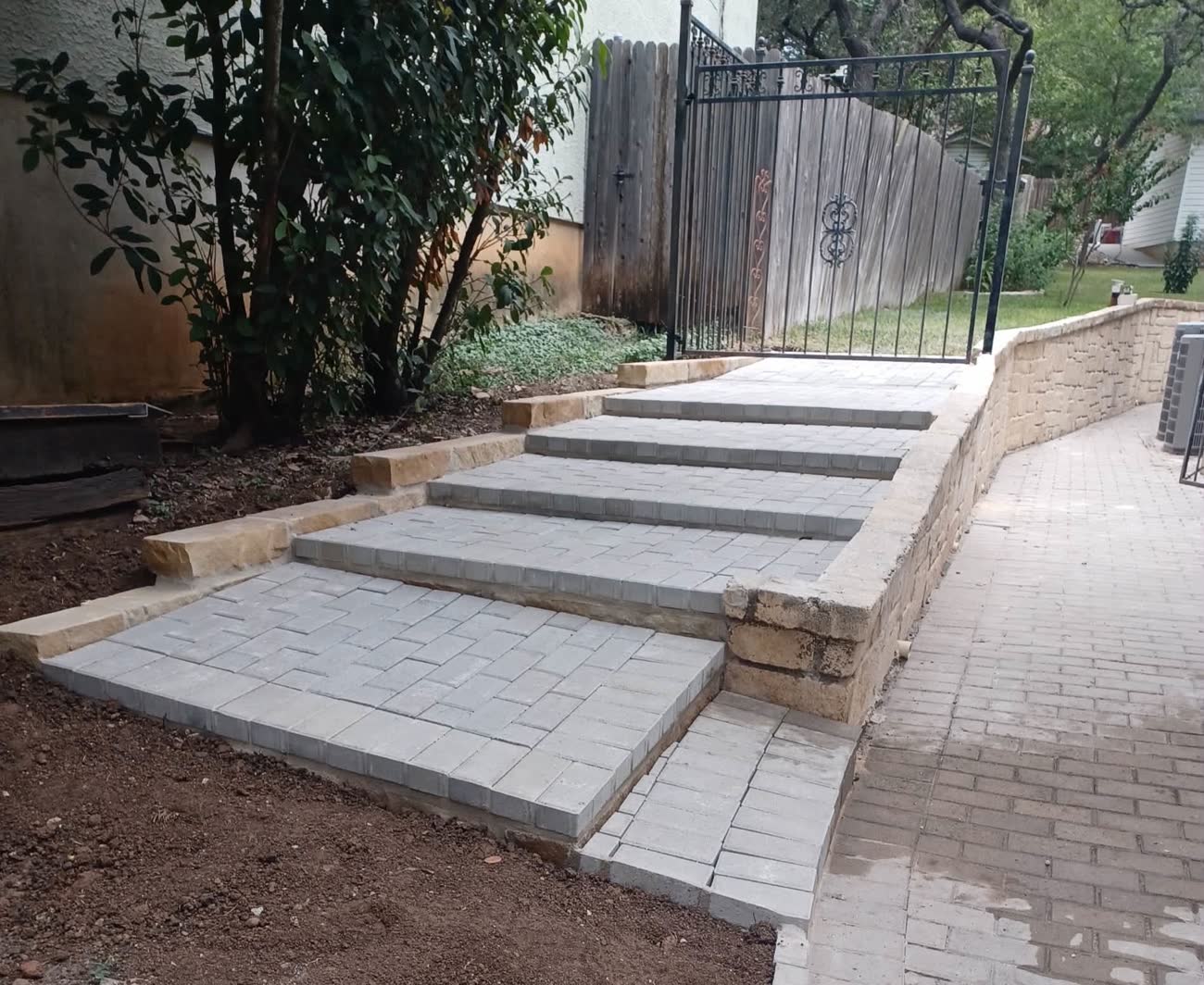
Solid limestone treads set into the grade, built wide enough to walk without thinking about it.
Set into the slope rather than stacked on top of it, so the rise stays even from the bottom tread to the top and the run ties into the wall beside it.
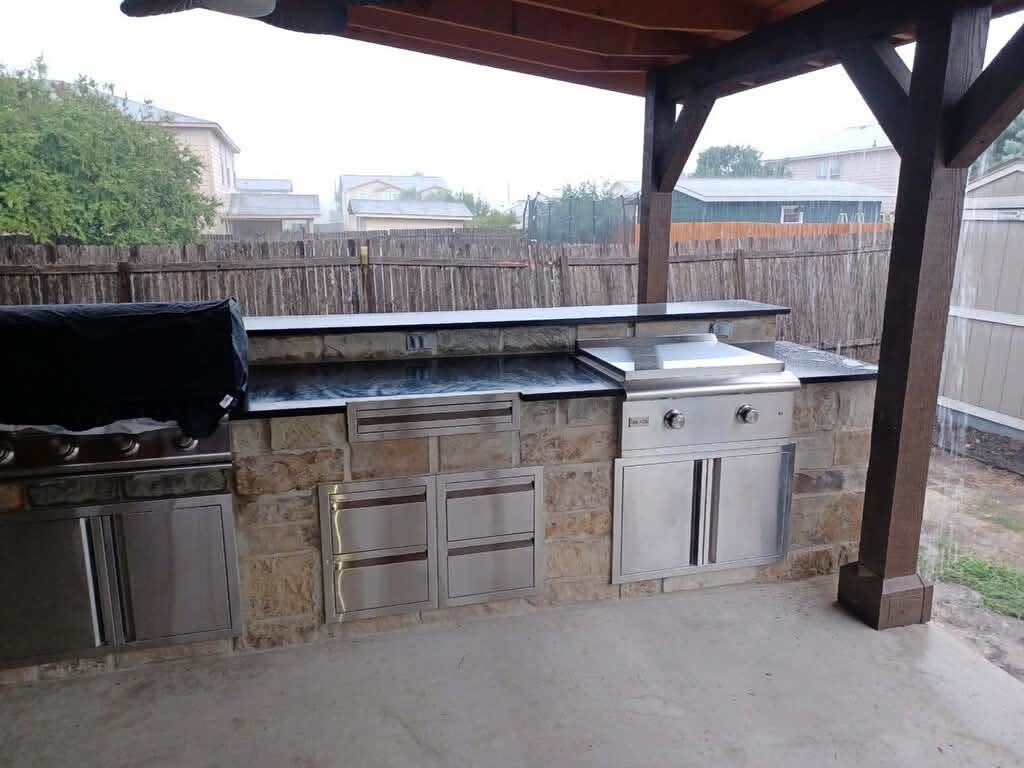
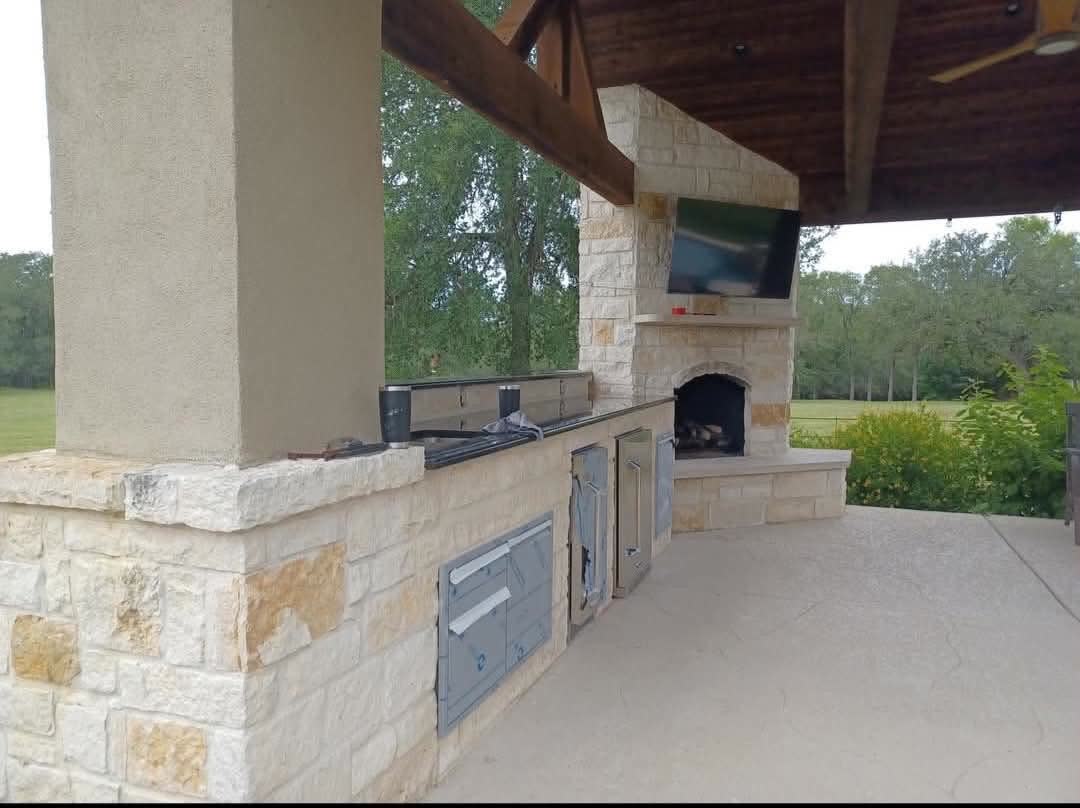
Stone base, granite top, and the grill, doors, drawers and fridge set in. Built on site to the space rather than dropped in as a unit.
Because it goes up course by course in place, it fits the run of wall it is going into — and a fireplace goes in alongside where there is room for one.
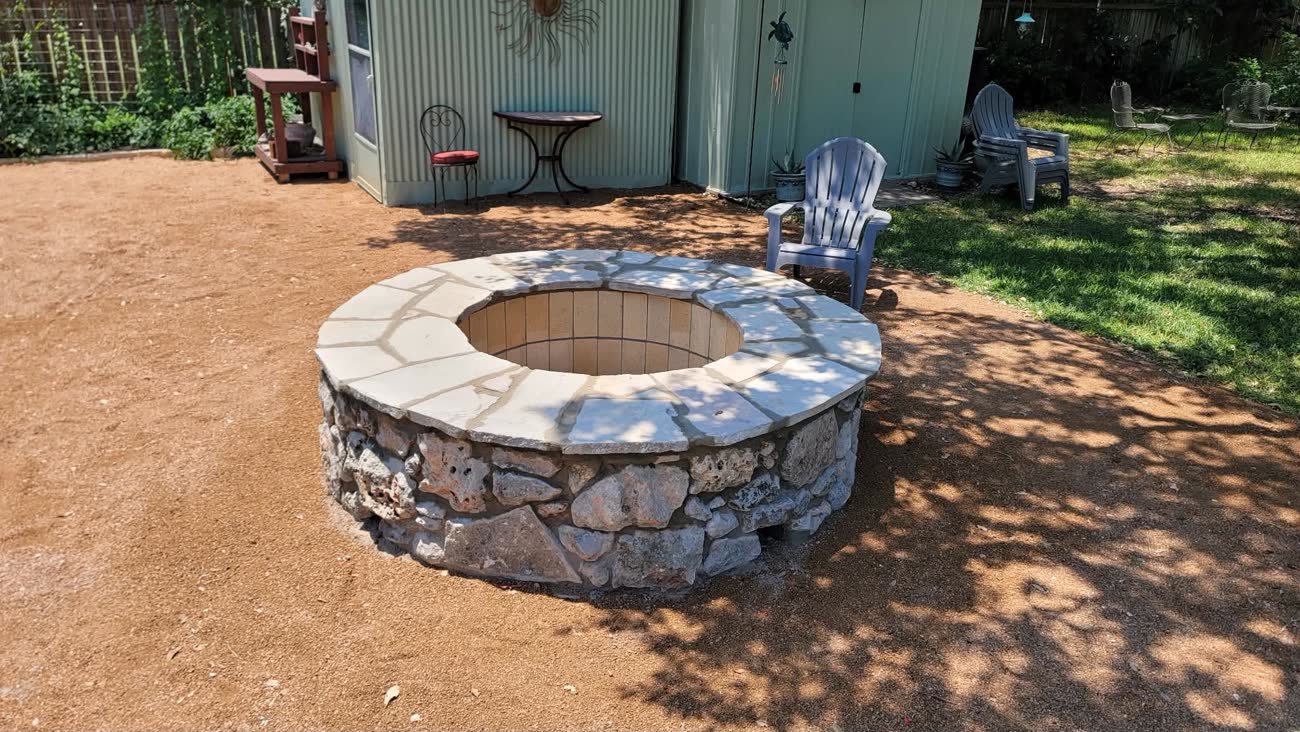
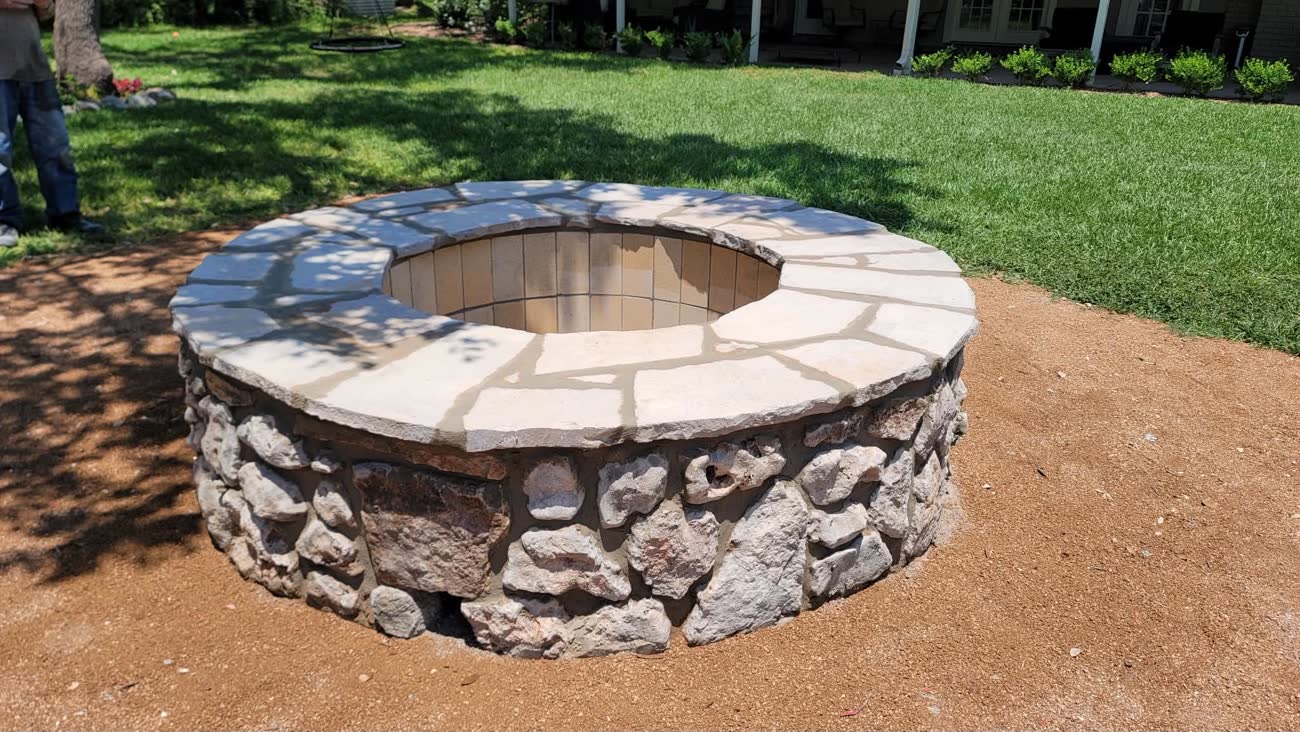
Round stone pits with a capped rim you can set a drink on. Built where the yard actually gets used.
Set on a gravel or decomposed granite surround so the ground around the pit drains and stays walkable instead of turning to mud the first wet week.
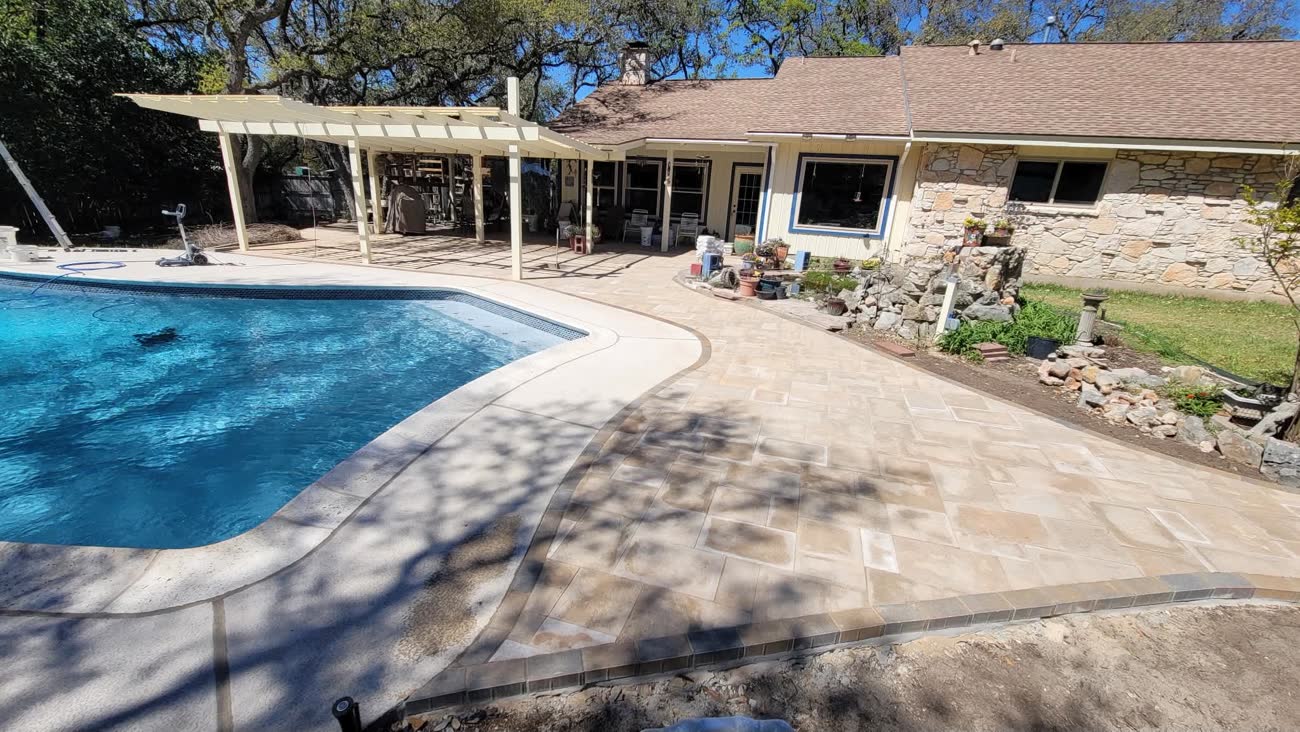
Travertine and paver decks laid around a pool, graded so water runs away from the coping.
Laid to follow a curved pool rather than squared off around it, and fallen away from the water so the deck sheds instead of pooling at the edge.
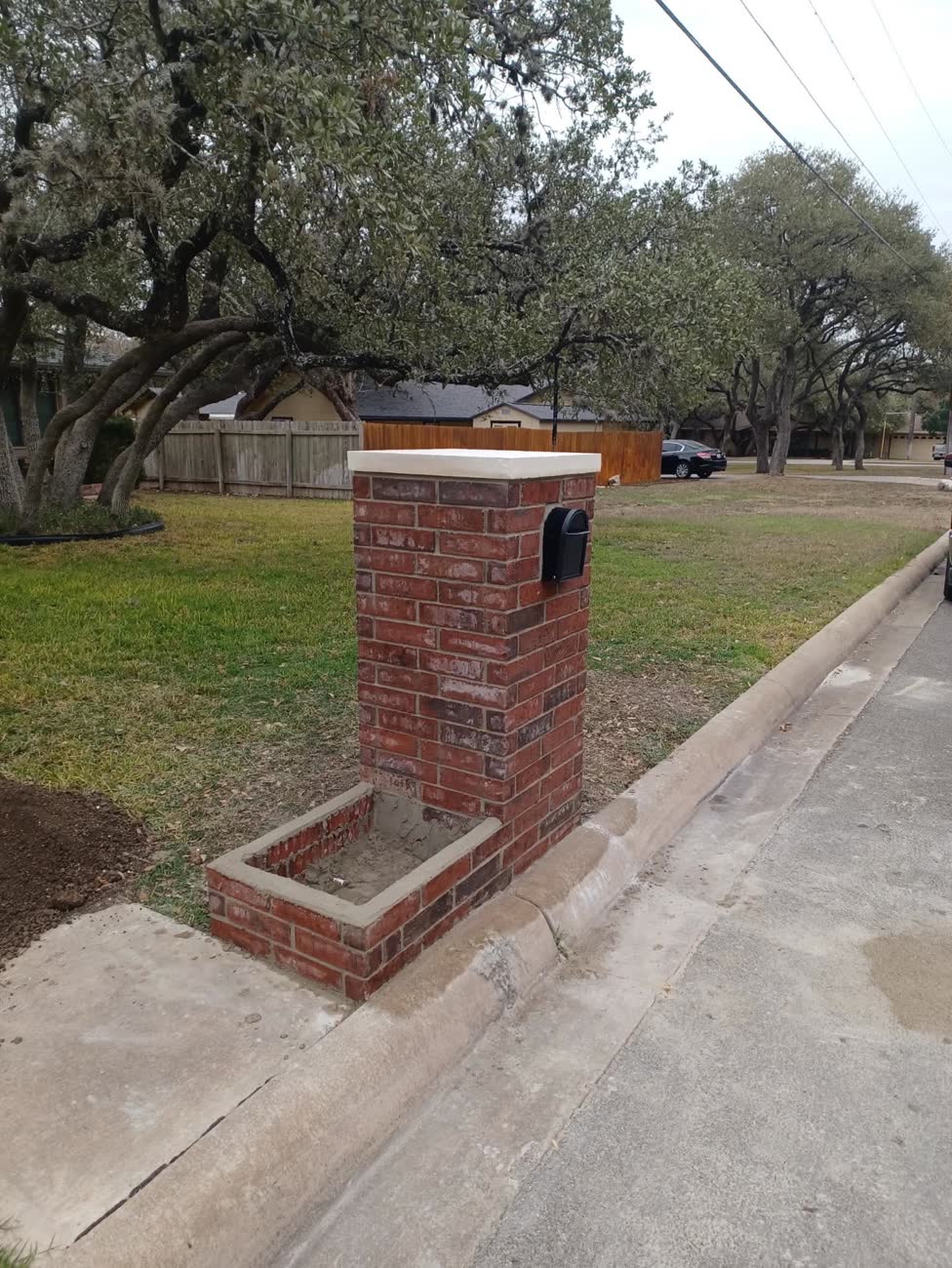
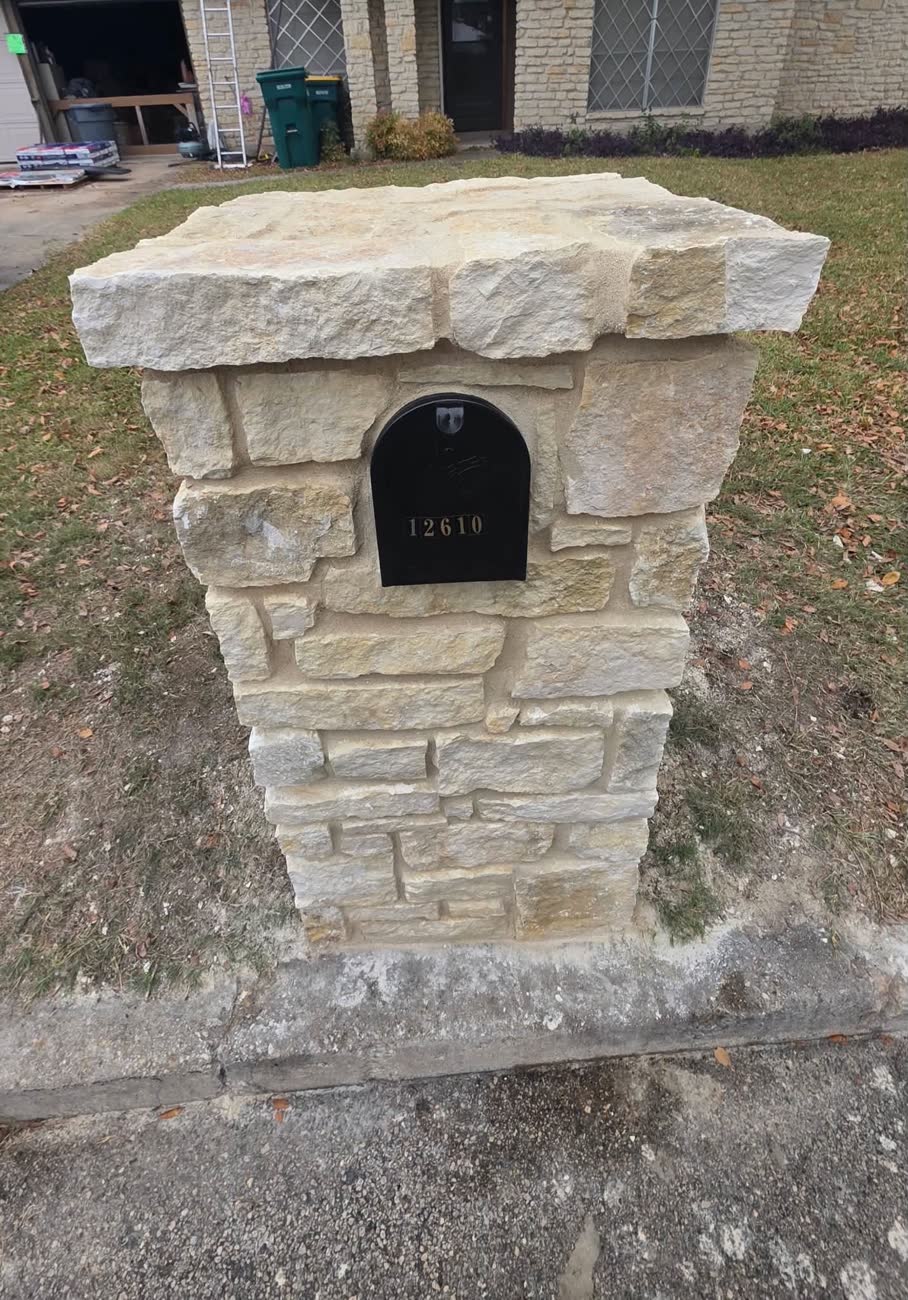
Brick or cut limestone columns on a footing, built to match the house rather than the one the builder put in.
On a footing, with a cast stone cap on top, and a planter at the foot where the kerb has the room for one.
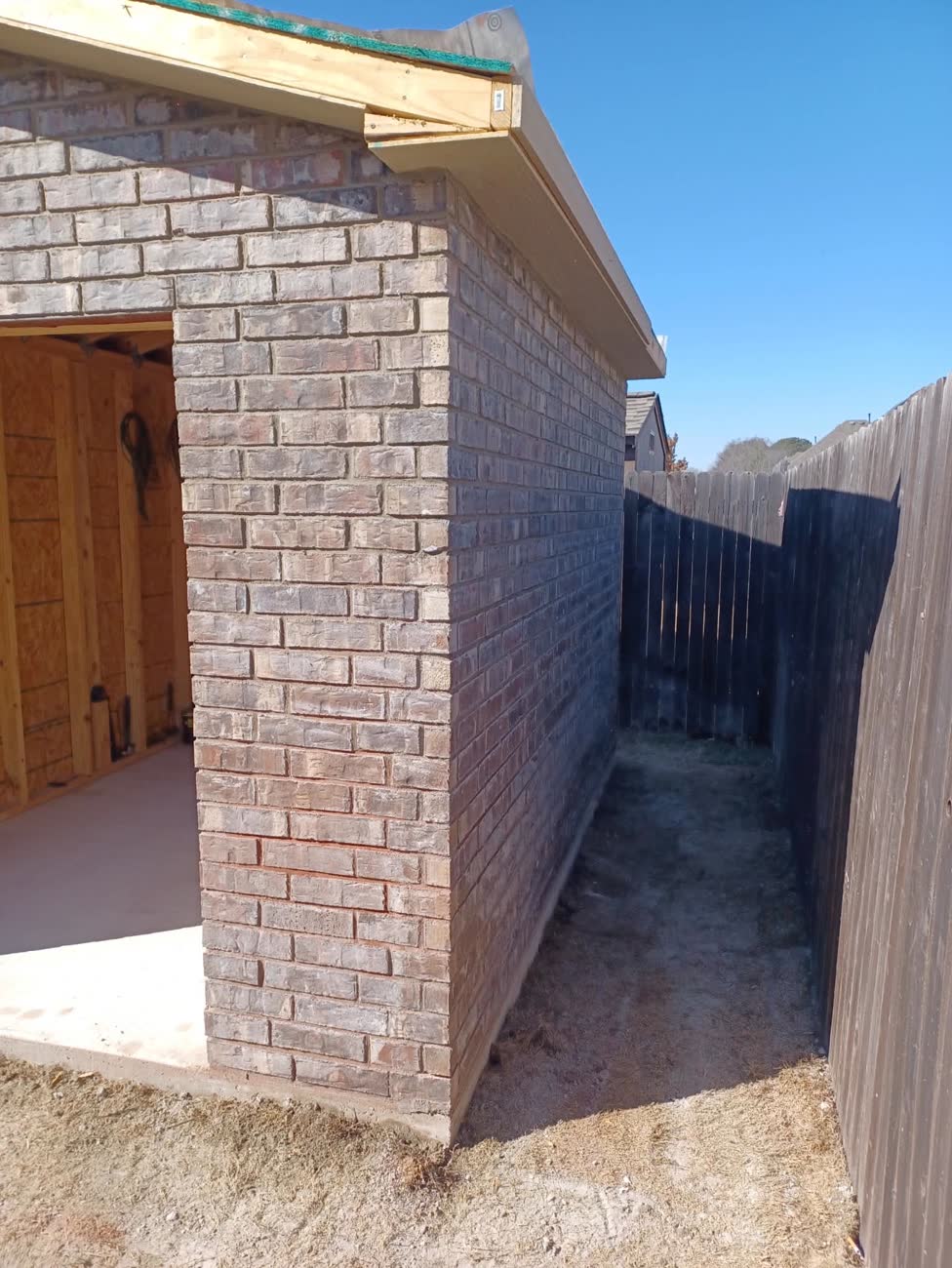
Brick veneer on outbuildings, sheds and additions, tied in so it reads as part of the house instead of bolted onto it.
Run right out to the corners and matched into the existing brick, which is the difference between an addition that disappears and one you can spot from the street.
We focus on installation and are not taking on repair work at the moment — so if you are after a patch or a fix to someone else's job, we are not the right call and we would rather say so now. For new work: send a photo of the space and a rough size, and we will come and look before anything is priced.